
I didn't expect to cry watching The Plastic Detox documentary...
The scene I can't stop thinking about

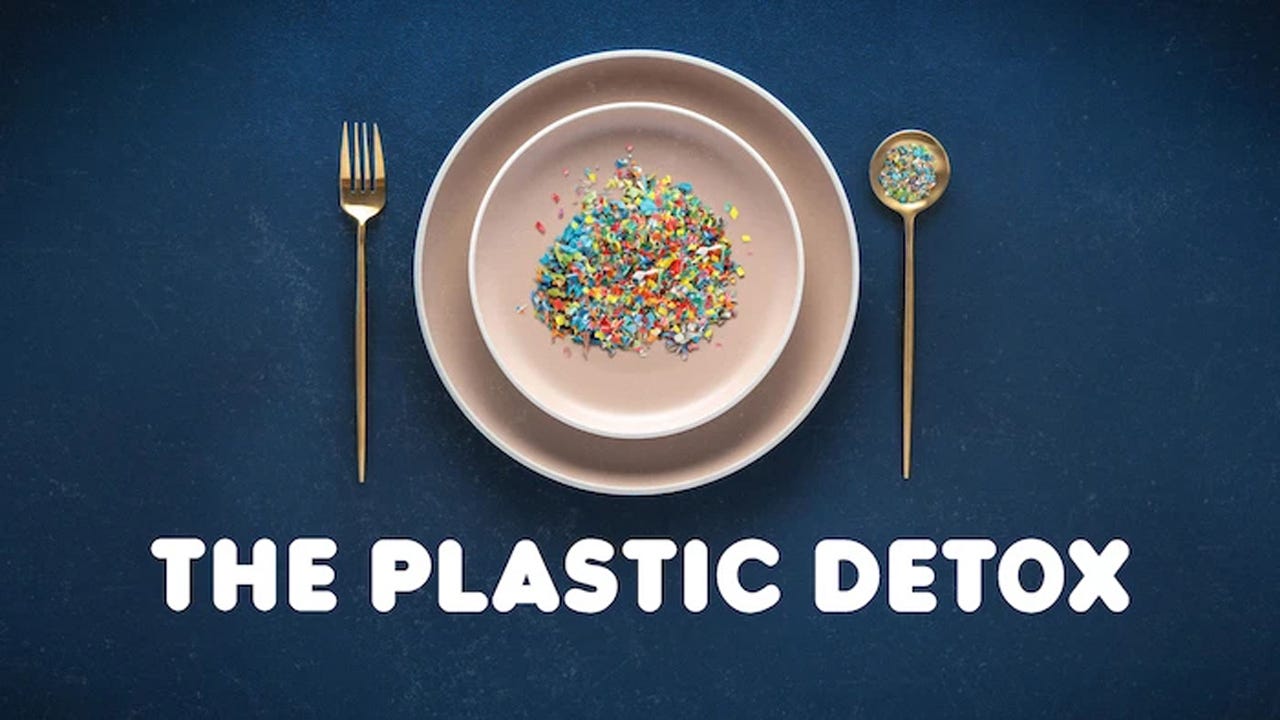
I watched The Plastic Detox documentary on Netflix a couple weeks ago.
I didn’t expect to cry.
I could have guessed it’d be well done had I known how involved Dr. Shanna Swan was. I really appreciate her work; I recommend her book all the time.
She’s a trailblazing scientific researcher who’s been working on hormone-disrupting chemicals for decades now… But she has a knack for making her research very accessible to non-scientists.
In the doc, Dr. Swan takes 6 couples struggling with infertility through a 3-month intervention—swapping out their products and reducing their exposure to plastics and hormone-disrupting chemicals—to see if it makes a difference.
They do before, during, and after measurements of various things, including the levels of phthalates and bisphenols in their bodies and the men’s sperm quality. (Spoiler about the results at the bottom!)1
But there was one part of the doc I keep thinking about:
Sharon Lavigne from Rise St. James (an absolute queen who did not set out to become an activist) and Rev. Lennox Yearwood from the Hip Hop Caucus are telling the story of how the community stopped a new petrochemical facility from being built in Cancer Alley, Louisiana.
And you know how they were able to successfully stop this plant from being built in the end?
They used a law that prohibits building on graveyards. 😳
When they found unmarked graves of enslaved people on that land (the plant was going to be built on an old plantation), it became illegal for the $9+ billion plan to move forward.
First of all: chills.
To think about how some of the ancestors of current Louisiana residents—people who went through the worst suffering and injustice—are now, generations later, saving their descendants from yet another facility that would further degrade their health...
As Rev. Yearwood said, “It’s almost like those ancestors are reaching back and saying ‘enough.’”
Second of all: I was talking to my friend about this and she mentioned how weird it is what we seem to find ‘sacred.’
How dead bodies are worth protecting by law, but living bodies are… not?
How we will protect the dead from desecration, but we won’t protect the living from cancer and birth defects.
How much sense does that make?
We are currently moving backward when it comes to protecting people from toxic chemicals in the United States.
But if there’s one thing the David-and-Goliath story in St. James, Louisiana, teaches us, it’s that everyday people can still make a big difference.
Yes, it often seems like the powerful people & corporations will always win. But victories like that one remind us that the people have power too.
If you’d like some practical suggestions for how to make your voice heard, here are a couple of ideas:
Tell your representatives NOT to roll back health protections from TSCA by filling out this form. Toxic Free Future has made it super easy for us—all you have to do is fill out your name & address and they will send a pre-written message (which you can edit if you want) to the reps where you live. (This essay from Lindsay Dahl gives a rundown on the changes that are currently being proposed for the Toxic Substances Control Act.)
Attend the People vs. Poison rally in D.C. on April 27th as the U.S. Supreme Court hears Monsanto v. Durnell (which could limit the ability of future victims to hold chemical companies accountable in court).

🎥 SPOILER: I totally get that watching this kind of documentary can feel empowering for some people, but exacerbate anxiety in others. The doc talks a lot about things like falling fertility rates, increasing cancer rates, and other consequences of our polluted world. Stressful things.
So if you’re stressed about it, I want to tell you that the doc had a happy ending. After the 3-month intervention, 5 out of 6 of the men’s sperm counts went up (some quite significantly) and 3 out of the 6 couples became pregnant. 👏🥹 Needless to say, I absolutely love seeing results like this. Despite the fact that this was such a small and informal “study,” these results bring me so much hope that swapping out our products for safer alternatives really can make such a big difference in our lives.